When Communities Lead, Children Thrive: Zainabu’s Story
by Kupenda
Posted on February 23, 2026
Beliefs, Child, disability, education, Health, International, marginalized, stigma, vulnerable
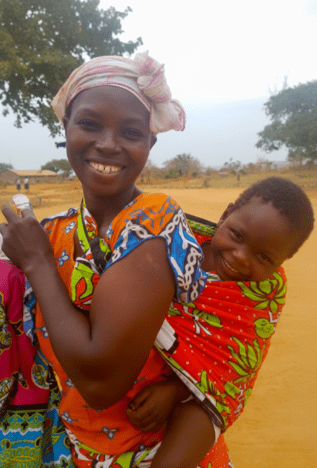
Kupenda activates local leaders and parents to come together to improve the lives of children with disabilities in their communities. These efforts have allowed children like Zainabu and her peers to access medical care and education, experience love and inclusion, and reduce their vulnerability to violence and abuse.
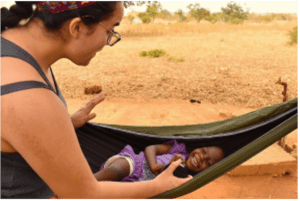
A Kupenda volunteer enjoys spending time with Zainabu
Living With Disability in Lango Baya
Six-year-old Zainabu does not walk or talk because of her cerebral palsy. Although her family longs to support her, their small farm generates less than a dollar each day, like 90% of people in her home village of Lango Baya, Kenya. Many community members believe Zainabu’s cerebral palsy was caused by witchcraft, causing the family further alienation and lack of assistance. Like many families raising children with disabilities in the area, Zainabu’s family faced stigma, isolation, and little access to education or health services.
Reducing Stigma Through Community Leadership
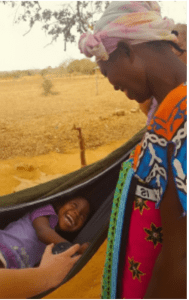
Zainabu and her mother
To address these challenges, Kupenda has conducted disability advocacy workshops in the community over the past nine years with pastors, traditional healers, government representatives, and other community groups to reduce stigma and encourage support to families impacted by disability.
Empowering Parents to Advocate
Following these workshops, community leaders identified 76 families impacted by disability, none of whom had access to proper education or medical services. These families were then brought together for a parent disability workshop, where they shared challenges, learned about the medical causes of disabilities, and were informed of their legal rights. Motivated to enroll their children in school, parents soon discovered that appropriate schools were too far away and already overcrowded, leaving many children still excluded.
From Advocacy to Action
Parents and community leaders then began meeting regularly and advocating together for their children’s right to education. Their advocacy led the local government to donate ten acres of land for a new special school and commit to paying teachers’ salaries once the facility was established. With support from Kupenda and local partners, classrooms and essential facilities were constructed and, a few years later, the school officially opened, providing local access to specialized education for children who previously had none.
Expanding Access for the Most Vulnerable
Community advocates continued their efforts, inspiring the government to construct a dormitory on campus so that children with mobility challenges could stay at the school. This development has made education accessible to many children from remote communities who otherwise would not have been able to attend.
Building a Model for Inclusion
After nearly a decade of sustained government support for this project, Kupenda is now working with the Ministry of Education in Kilifi County to develop the school into a model inclusive school—where children with and without disabilities learn together with appropriate accessibility and support. The goal is to demonstrate to the country what is possible when children with disabilities receive meaningful inclusion and the services they need to thrive.
Lasting, Community-Led Change
Today, the school serves Zainabu and many other children like her, providing access to education, therapy services, and medical care that improve functioning and quality of life. Would you consider joining Kupenda in standing with children like Zainabu? Your support creates lasting, locally driven change that transforms opportunities for children with disabilities and their families.
Want to keep updated on Kupenda’s work?
Follow us on Facebook, Instagram, LinkedIn, YouTube, and X.
Learn more about Kupenda in our podcast.
Sign up for our newsletter.
Or provide a child scholarship for just $35 / month.


Leave a Reply