From Kenya to the World: How Kupenda’s Expertise Is Shaping Global Disability Research
Posted on March 9, 2026
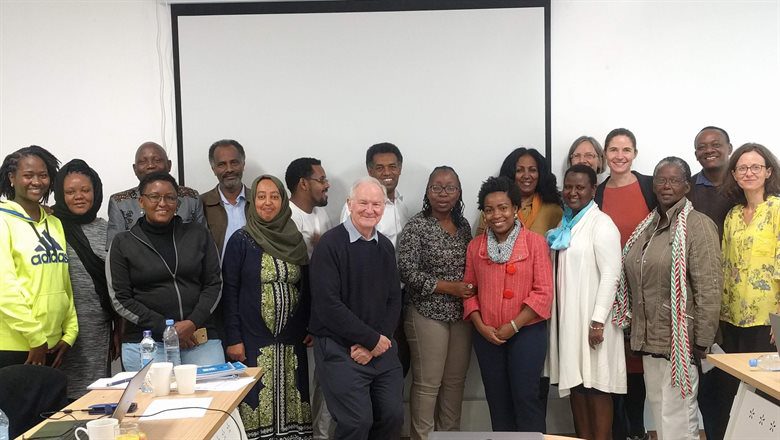
When global researchers want to understand how to support children with developmental disabilities in African communities, they increasingly turn to Kupenda.
In 2022, King’s College London and Aga Khan University invited Leonard Mbonani, Kupenda’s Kenyan director, to serve as an advisor on the SPARK project (Supporting African Communities to Increase Resilience and Mental Health of Kids with Disabilities) which has now been published in a peer-reviewed research protocol).
The multi-year collaboration brought together researchers and community partners in Kenya, Ethiopia, the United Kingdom, and the World Health Organization to test new ways of identifying children with developmental disabilities and connecting families to care.
Leonard’s role was critical.
For nearly three decades, Kupenda has worked alongside families and community leaders to challenge harmful beliefs about disability and improve access to services. That experience made Leonard and the Kupenda team uniquely positioned to guide researchers on how these tools would actually work in real communities.
Throughout the project, Leonard advised on the development of community health tools designed to help identify children with developmental disabilities and connect them to care. He also helped researchers understand cultural dynamics that can determine whether programs succeed or fail, such as the importance of engaging household leaders and community gatekeepers before conducting home visit and conducting outreach.
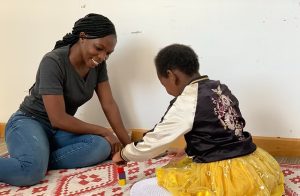 SPARK’s research included communities in rural Kilifi, informal settlements in Nairobi, and Addis Ababa, Ethiopia. More than 1,500 children were screened using a new community identification tool, with nearly 1,000 identified as potentially having developmental disabilities and referred for assessment and support. The project also tested the World Health Organization’s Caregiver Skills Training program, enrolling hundreds of families in one of the largest trials of its kind.
The findings are now informing how governments and health systems in Africa identify and support children with developmental disabilities.
Next, the research will expand through a new four-year initiative called SPARKLE, which will focus on integrating these tools into government systems and developing long-term care pathways for children and their families.
Leonard will continue to play a leadership role in the new phase, guiding community engagement and implementation in Kenya.
For Kupenda, the project reflects something bigger: recognition that the organization’s decades of community-based work have positioned it as a global leader in disability inclusion. Today, Kupenda’s programs reach more than 100,000 children each year across more than 30 countries.
The lessons learned in Kilifi are helping shape how the world supports children with disabilities.
Learn more about the SPARK project:
https://www.thesparkproject.net/kenya-team
Read the peer-reviewed research behind the SPARK project:
https://pubmed.ncbi.nlm.nih.gov/39449002/

Want to keep updated on Kupenda’s work?
Follow us on Facebook, Instagram, LinkedIn, YouTube, and X.
Learn more about Kupenda in our podcast.
Sign up for our newsletter.
Or provide a child scholarship for just $35 / month.


Leave a Reply