She Survived Infanticide: A Woman with Albinism Tells Her Story
Posted on February 15, 2026
Beliefs, Child, disability, education, Health, International, marginalized, stigma, vulnerable
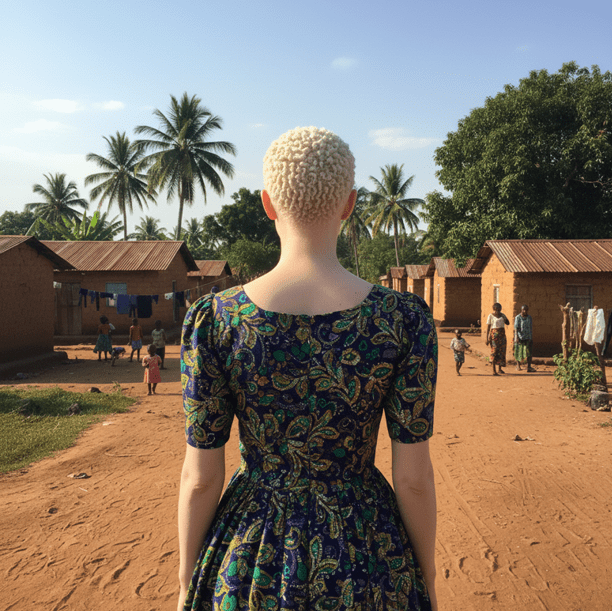
Editor’s note: We are sharing this story to illustrate the real, life-and-death consequences of disability stigma and why community-based education and advocacy are essential to protecting the dignity and lives of children.
Content note: This story includes discussion of violence related to childbirth and disability-based harm.
Harmful beliefs about disability are not abstract ideas or distant traditions. They shape real decisions, made in real moments, with life-and-death consequences. When disability is seen as a curse, a punishment, or something “not fully human,” families are forced into impossible situations—and children pay the price.
At a recent Kupenda disability advocacy workshop, a woman with albinism shared her story to help others understand what those beliefs once meant in her community.
A Birth Surrounded by Fear
She described a home birth attended by several women. As the baby began to emerge, the women in the room realized something was different. One woman struck the laboring mother and told her to crush the child and allow the baby to die. When another woman tried to stop this and urged the mother to continue, she too was struck and silenced.
The room filled with voices insisting that the birth should not continue and that what was being delivered was not a child.
Despite the violence and pressure surrounding her, the mother chose to keep pushing. When the baby was delivered and her skin appeared white, people immediately accused the mother of infidelity with a white man. The child was not understood as having albinism, but was instead met with fear, suspicion, and rejection rooted in harmful beliefs rather than medical knowledge or human dignity.
Where Stigma Meets Survival
The woman sharing this story explained that she survived only because someone in that room chose to resist the pressure to harm her.
She shared this story to explain something many people outside her community have never considered: this is why there are no elderly people with albinism where she grew up. Children like her were often killed at birth because of deeply rooted beliefs about disability and difference.
Her experience is not shared to shock, but to clarify what is at stake.
Kupenda’s disability advocacy workshops exist to confront exactly these beliefs—by creating space for honest stories, accurate information, and reflection rooted in dignity and shared humanity. In these workshops, community members learn that conditions like albinism are not curses or moral failures, but part of human diversity. They examine how stigma takes hold and how it can be replaced with understanding, compassion, and action.
Change does not happen all at once, but it begins when silence is broken, when lived experiences are heard, and when communities are invited to choose a different way forward.
This woman is alive because someone chose differently in a moment of fear.
Our work exists so that future generations never have to rely on such moments of courage to survive.
Want to keep updated on Kupenda’s work?
Follow us on Facebook, Instagram, LinkedIn, YouTube, and X.
Learn more about Kupenda in our podcast.
Sign up for our newsletter.
Or provide a child scholarship for just $35 / month.


Leave a Reply